$3M grant to improve risk prediction of pre-invasive breast cancer
Study aims to understand why early-stage breast cancer becomes invasive in Hawaiʻi populations.

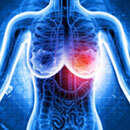
Study aims to understand why early-stage breast cancer becomes invasive in Hawaiʻi populations.

UH researchers discovered 31 blood-based RNA markers capable of predicting lung cancer risk up to 10 years before clinical diagnosis.

The UH Cancer Center Body Composition Lab has earned prestigious international designation.

Researchers are developing new ways to predict which lung cancer patients will respond to immunotherapy.

Research has shown that art therapy and other creative approaches can help reduce emotional distress.

UH Cancer Center launches Hawaiʻi's first facility dedicated to early-phase clinical trials for cancer patients.
Study finds Hawaiʻi cancer patients face major travel burdens, driving demand for local care expansions.

New center will support innovative biomedical research, develop future scientific leaders, and expand research infrastructure in Hawaiʻi.

Michele Carbone is recognized for his discovery that mesothelioma is driven by inherited gene-environment interactions.
Researchers identify blood signals linked to inflammatory breast cancer, paving way for earlier detection blood test.