Fresh volcanic samples offer clues into new Kīlauea eruption
Earth sciences professors led a rapid response effort to analyze fresh samples of Kīlauea lava in the Electron Microprobe Laboratory.


Earth sciences professors led a rapid response effort to analyze fresh samples of Kīlauea lava in the Electron Microprobe Laboratory.

This eruption was triggered by a relatively small and rapid change after a decade-long build up of pressure in the upper parts of the volcano.

Researchers will trace the volatile elements that form the atmospheres of planets, establishing a scientific foundation for detecting the signatures of life on other worlds.

Researchers found sinking carcasses of fish from near-surface waters deliver toxic mercury pollution to the most remote and inaccessible parts of the world’s oceans.

Mystery floods that emerge suddenly from glaciers or ice caps were serendipitously solved by a team led by a UH Mānoa researcher.

Low-lying reef islands such as the Marshall Islands could become unstable by mid-century and permanently lost as soon as 2080.
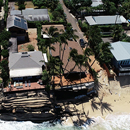
Researchers assessed the shoreline around Oʻahu most vulnerable to erosion under three scenarios of sea-level rise—all estimated to occur before, and shortly after mid-century.

St. Baldrick’s Foundation will host its 10th annual Honolulu fundraising event virtually on September 27, 12 p.m.–5 p.m.

A team of volcanologists and ocean explorers used evidence to determine Pūhāhonu now holds this distinction.

The data suggests that present-day extreme water levels will become commonplace within the next few decades.