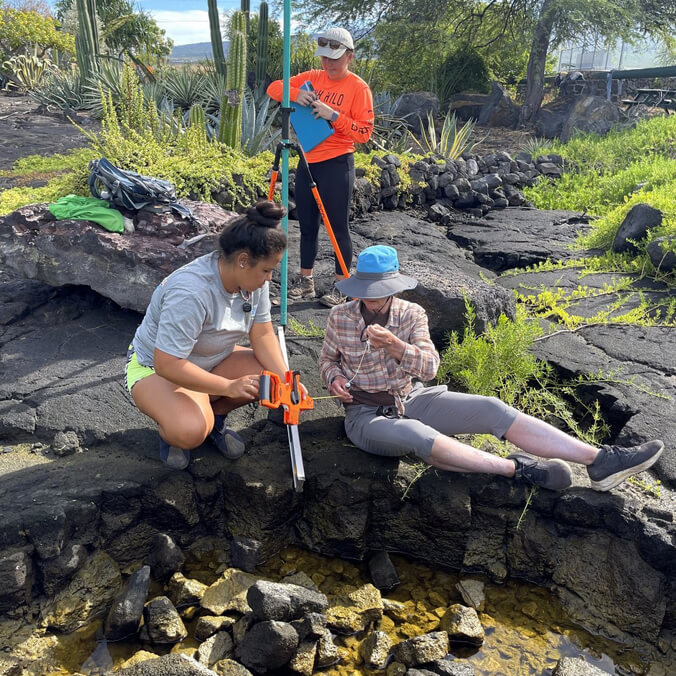
Reading time: 2minutes Students who completed the TCBES graduate program now serve as conservation and environmental scientists and managers throughout Hawaiʻi.
Reading time: 3minutes UH researchers contributed more than 10,000 images of humpback whale tail flukes for the study which utilized artificial intelligence recognition.
Reading time: 4minutes Midshipman Mahinalani Vongsy achieved the rank of ensign with the U.S. Navy in a ceremony that was held on December 15, and also earned her bachelor's degree in psychology this fall.
Reading time: 3minutes Biology student Taylor Barongan shared her voice on Asian Americans hardships in the STEM field through a commentary article published in July 2023 issue of Cell.
Reading time: 4minutes The program encompasses a unique blend of Indigenous and Western science and culture, with a core focus on the field of island invasion biology in the Pacific.