Could iron save the seas? Researchers outline strategy for carbon removal
Researchers are calling for a new generation of carefully designed ocean iron fertilization field trials.
UH research revealed the conditions that support phytoplankton blooms and offer the first comprehensive look at the anatomy of these events.
Opened in 2010, the 26,997-square-foot facility has become a hub for groundbreaking research on marine microbes.
The rare and large summertime phytoplankton bloom occurred in the North Pacific Subtropical Gyre in summer 2018.
UH Mānoa researchers discovered that a virus, FloV-SA2, encodes one of the proteins needed to make ribosomes.
The research will address the interlinked questions of how rapidly the ocean is gaining heat and carbon while losing oxygen.
Chip Fletcher was appointed as special advisor for Climate and Resilience and David Karl was appointed as chair of the Governor’s Advisory Committee on Marine Affairs.
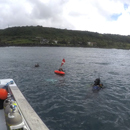
A study revealed that each type of coral and algae from a coral reef produced a unique suite of hundreds of chemical compounds.
In collaboration with the community, UH researchers are sampling West Maui reefs to assess the impact from the toxic ash from the devastating Lahaina wildfire.