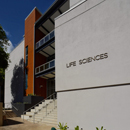
The Life Sciences Building will be home to the College of Natural Sciences biology, microbiology and botany departments along with the Pacific Biosciences Research Center.
Researchers found the survival and development of coral in its first days of life was negatively affected by elevated nutrients and an increase in water temperature.
The competition is designed to increase cross-unit and cross-disciplinary collaboration in strategic areas that have a strong possibility for success in building on UH Mānoa’s strengths while addressing challenges.
New research found that Hawaiian rice coral in Kāneʻohe Bay hosts more heat-tolerant symbiotic microalgae in their tissues compared to corals in deeper waters.
University of Hawaiʻi at Mānoa researchers Margaret McFall-Ngai and Nicole Hynson, co-authored a publication announcing the new consortium and its goals for advancing the far-reaching field of microbiome research.
Researchers, including those from the School of Ocean and Earth Science and Technology, are involved in studying one of the most deceptively simple animals on Earth.
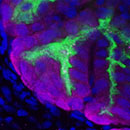
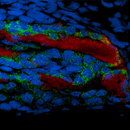
Luminescent bacteria that live harmoniously inside the Hawaiian bobtail squid’s light organ actually change the gene expression in other organs of their squid host according to a new study by UH Mānoa researchers.
UH Mānoa students, administrators and officials signed their names on the final beam of the building’s steel structure before it was lifted into place.